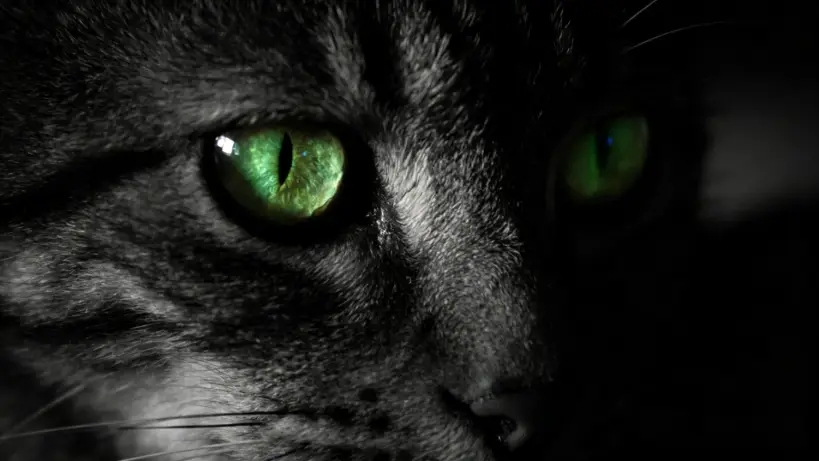
When night falls, you might catch your cat’s eyes glowing softly—maybe a faint green, yellow, or even blue—like two tiny night pearls. Contrary to popular belief, their eyes don’t actually produce light on their own. Instead, this glow comes from unique physical adaptations that evolved to help them hunt at night, and every cat’s “glowing eyes” holds a little secret all their own.
As natural night hunters, cats’ eyes are like precision optical tools—every detail is designed to catch even the dimmest light and lock onto prey. That charming glow in the dark? It’s one of the cleverest features of this “tool.”
It’s Reflection, Not Emission: The Science Behind Cats’ Glowing Eyes
A common misconception is that cats’ eyes glow on their own, but the truth is it’s reflection, not emission. Inside a cat’s eye, behind the retina, there’s a special reflective layer called the tapetum lucidum—think of it as a tiny, high-efficiency mirror that recycles light.
When light enters a cat’s eye, it passes through the cornea and lens to reach the retina. Some of that light is absorbed by photoreceptor cells and converted into visual signals. The light that isn’t absorbed gets reflected back onto the retina by the tapetum lucidum, giving the photoreceptors a second chance to detect it—and boosting the cat’s low-light vision.
When that reflected light passes through the pupil again and exits the eye, we perceive it as a glow—much like how reflective road markers shine in the dark.
An Evolutionary Gift: The Tapetum Makes Cats Nighttime Experts
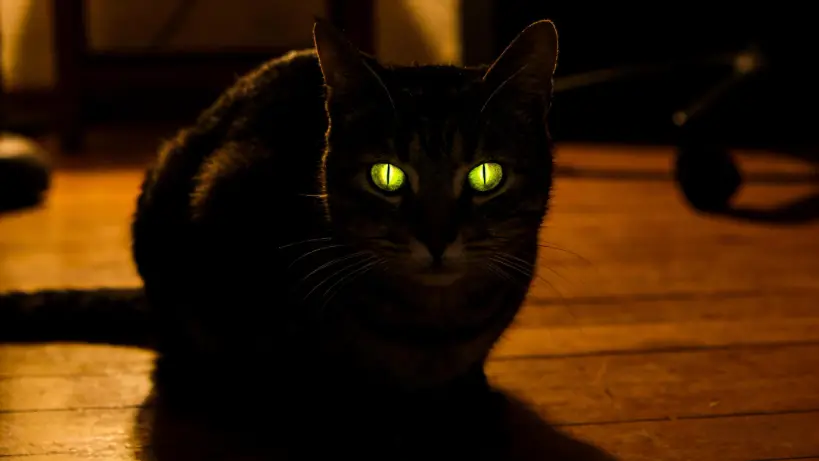
This amazing tapetum is an evolutionary gift that helps cats thrive in nighttime environments. In the wild, cats hunt mice, insects, and other prey at dawn, dusk, or night—times when light is scarce—and the tapetum solves this problem perfectly.
Thanks to the tapetum, a cat’s ability to see in dim light is 6 to 8 times better than ours. They only need 1/6 of the light humans require to see clearly, allowing them to move nimbly and lock onto prey in the dark—true to their “night hunter” reputation.
What’s special is that every cat’s tapetum is unique—varying in thickness and pigment. That means the brightness and color of their eye glow are one-of-a-kind, just like human fingerprints.
Why Do Some Cats Have Different Glow Colors?
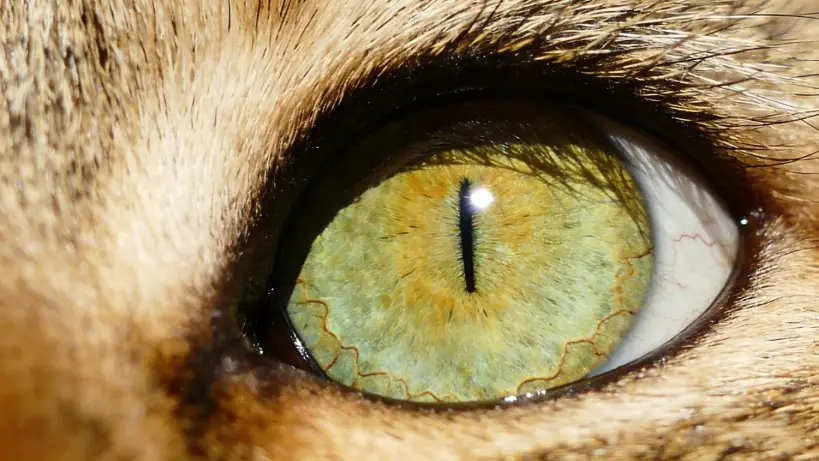
If you’ve spent time around different cats, you’ve probably noticed their eye glows come in different colors—most commonly green or yellow, and sometimes blue. This isn’t random; it’s determined by the tapetum’s pigment and the cat’s fur color genes.
Cats with dark fur, like black or orange cats, often have yellow or green eye glows. Light-colored or blue-eyed cats, such as Persians or Ragdolls, might have a blue or white glow. This difference doesn’t impact their vision—it’s just another way they stand out as unique.
Additionally, the size of a cat’s pupil affects the glow. In the dark, their pupils dilate into circles, letting more light in and making the glow brighter. In bright light, pupils shrink to slits, and the glow fades or disappears entirely.
These Red Flags Mean It’s Time to See a Vet
While glowing eyes are normal, there are some red flags that should prompt you to take your cat to the vet. After all, a cat’s eyes are crucial to how they experience the world—even small changes can signal a health issue.
If only one of your cat’s eyes glows (or doesn’t glow at all), if the glow color changes suddenly, or if the glow looks patchy, it could be a sign of retinal problems. Redness, frequent rubbing, or sensitivity to light may indicate conjunctivitis or keratitis (eye inflammation).
Also, as cats age, their tapetum naturally degrades, so their glow might dim or disappear—that’s perfectly normal. But if you notice signs of vision loss, like clumsiness or bumping into objects, it’s still a good idea to have a vet check them out.
Wrapping Up: Honor Your Cat’s Uniqueness, Protect Their Night Vision
A cat’s glowing eyes are an evolutionary wonder and a key tool for their life as night hunters. Every cat’s glow is as unique as their personality—one-of-a-kind and irreplaceable.
As cat parents, we can admire this natural beauty while keeping a close eye on their eye health. If you notice anything unusual, don’t guess or wait—reach out to a vet right away. That’s the best way to protect their vision, so they can keep exploring the world with those charming “night eyes.”